
Fix a Slice: Draw-Biased Setup for In-to-Out Practice
If your club path works across the ball from outside the target line, use the draw-biased setup as a visual rehearsal cue. You do not have to become a draw player. The drill gives you a physical reference for feeling the opposite of an out-to-in pattern, then working back toward neutral.
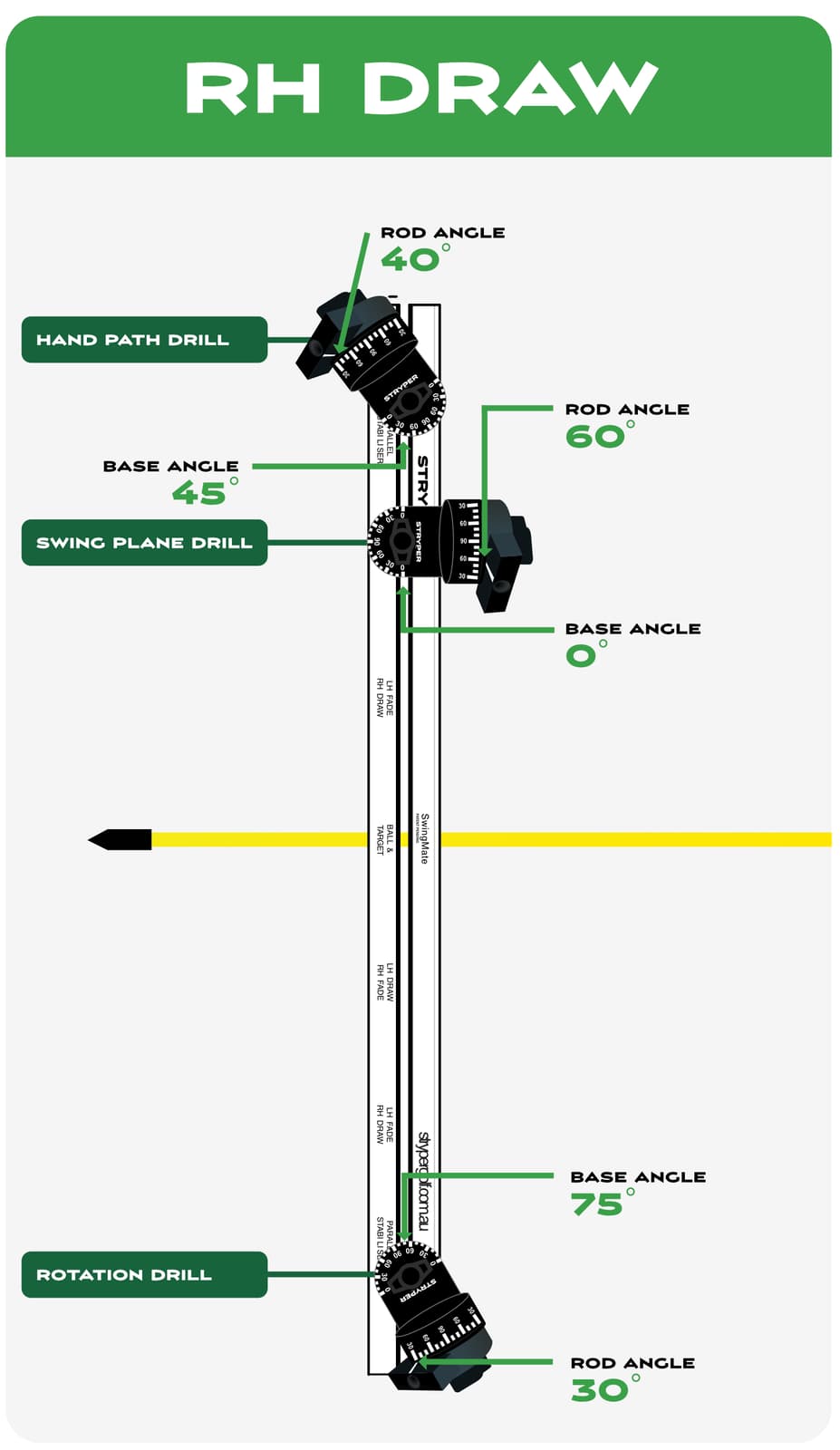
Right-handed draw setup
Left-handed draw setup
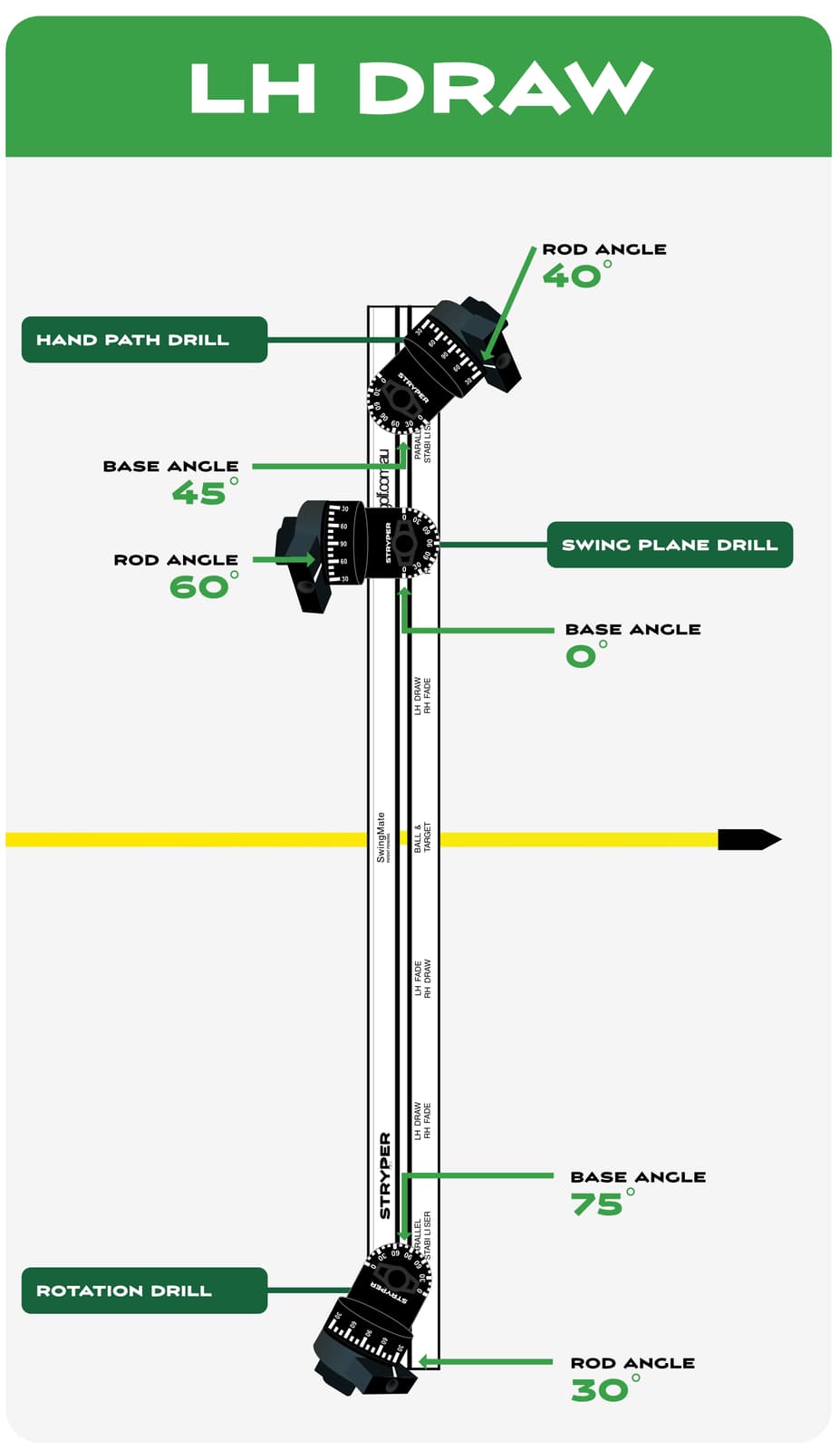
Draw-biased practice reference
- Use the DRAW ground-path rods as the visual club-path cue.
- For a right-handed golfer, start with the RH DRAW holes on the base plate.
- For a left-handed golfer, mirror the setup with the LH DRAW holes.
- Add the Swing Plane Drill using Hinge 2 as the raised swing-plane reference.
- Add the Hand Path Drill using Hinge 1 if the hands throw out or move away from the intended delivery window.
Fix a Hook: Fade-Biased Setup for Less Inside Delivery
If your club path gets too far from the inside, or the club gets trapped behind the body, use the fade-biased setup as a rehearsal cue. The goal is not to cut across the ball forever. The goal is to feel the club more in front of you, reduce the excessive inside path, and then work back toward neutral.
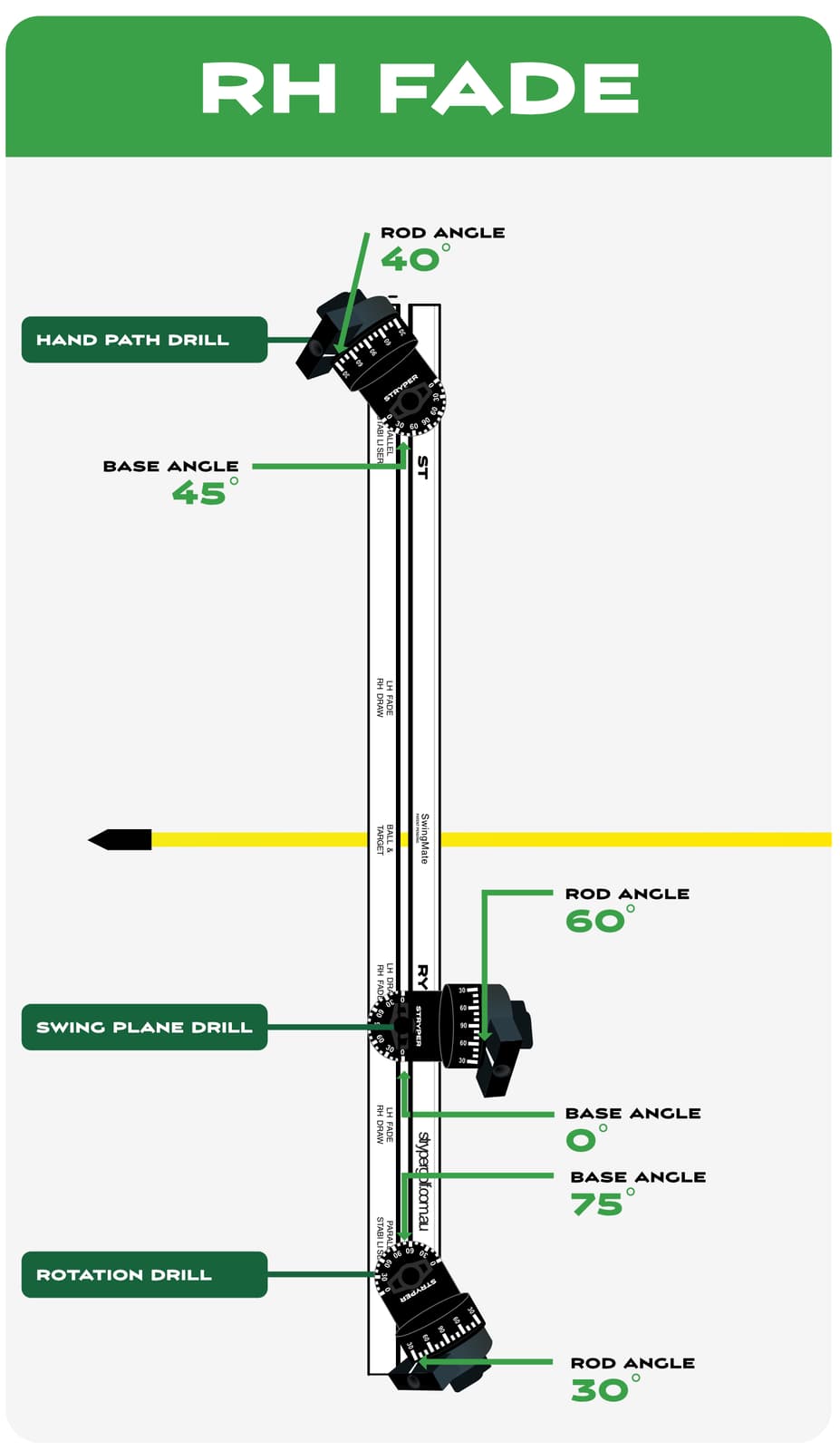
Right-handed fade setup
Left-handed fade setup
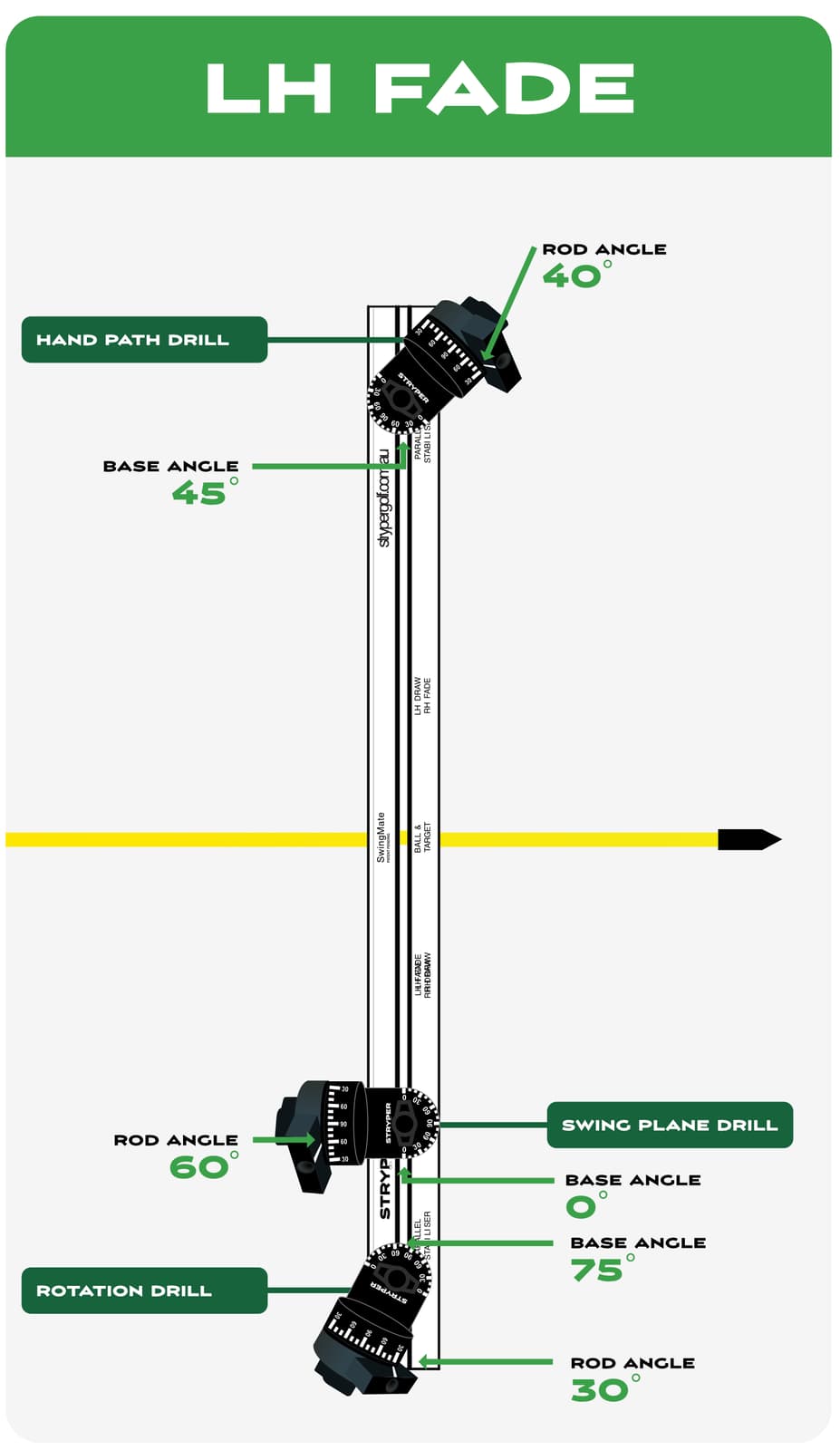
Fade-biased practice reference
- Use the FADE ground-path rods as the visual club-path cue.
- For a right-handed golfer, start with the RH FADE holes on the base plate.
- For a left-handed golfer, mirror the setup with the LH FADE holes.
- Use Hinge 2 as the main swing-plane reference.
- Use Hinge 1 to monitor hand path if your hands get trapped behind you.
Which SwingMate Setup Should You Try?
Use this table as a starting point. The right drill depends on your current movement pattern, not just the ball flight. If you work with a coach, use their diagnosis first and set SwingMate to rehearse that instruction.
| Current pattern | Typical miss | SwingMate setup to try | What to rehearse |
|---|---|---|---|
| Out-to-in / over the top The club path works across the ball from outside the target line. | Slice, pull-slice, pull. | Use the DRAW ground-path rods. Add Hinge 2 as the swing-plane reference. Add Hinge 1 if your hands throw out. | Rehearse the club moving under the swing-plane rod while the ground rods remind you of the path you are trying to feel. |
| Too far in-to-out / stuck underneath The club path gets too far from the inside, or the club gets trapped behind the body. | Hook, push-hook, block, stuck block. | Use the FADE ground-path rods. Use Hinge 2 as the swing-plane reference. Use Hinge 1 to monitor hand path. | Rehearse a less trapped delivery. The goal is to feel the club more in front of you, then work back toward neutral. |
| Steep but left The club is steep and the club path is still moving left across the ball. | Pull, wipey fade, weak slice. | Use Hinge 2 first. Then add Hinge 1. Use DRAW ground-path rods only if the club still exits sharply left. | Do not assume the answer is only “more in-to-out.” First improve the plane and hand-path window, then fine-tune path. |
| Too shallow / under plane The club gets too low, too inside, or buried behind the body. | Hook, push, stuck block, heavy inside delivery. | Use the FADE ground-path rods. Use Hinge 2 as the swing-plane boundary. Add Hinge 3 if the body stalls. | Rehearse the club staying more in front of the body instead of getting buried behind you. |
| Early extension / loss of posture The pelvis moves toward the ball and the torso stands up, often sending the hands/handle higher or farther out. | Thin shots, heel strikes, blocks, hooks, inconsistent strike. | Use Hinge 1 as a hand/handle ceiling. Pair with Hinge 3 if a body-turn checkpoint also helps the diagnosed movement. | Rehearse maintaining delivery space so the hands and handle do not have to rise or move out to make room. Treat the rod as feedback, not a diagnosis of the cause. |
| Poor rotation / stalled body The body stops and the hands flip, save, or reroute the club. | Blocks, flips, hooks, inconsistent strike. | Use Hinge 3 as the standard Rotation Drill: lead-knee checkpoint going back, trail-knee checkpoint through the finish. Pair it with Hinge 1 or Hinge 2 if the stall is also changing hand path or plane. | Rehearse turning through the shot without stalling at the ball. Start slowly and rebuild the movement before adding speed. |
| Upper-body spin-out / cut left too early The shoulders or chest open prematurely and the club is dragged across the ball before the arms/club have organised. | Pull, pull-slice, weak fade, glancing strike. | Put a 1.6 m rod in the Hinge 3 rotation position so the lower section remains a body checkpoint and the upper section extends into the club-exit corridor. Combine with Hinge 2 / DRAW references when the pattern is also over-the-top or out-to-in. | At slow speed, rehearse the sequence without letting the club invade the rod too early. The club can exit left normally later in the follow-through; this is about timing, not banning a leftward exit. |